 |
Chapter 5 |
IPO-ready equity plans
The new IPO playbook: Equity is becoming part of IPO readiness
For companies preparing to list, equity planning is becoming part of IPO readiness. The decision is no longer just whether to establish a plan before listing, but whether that plan is ready to support grants, employee communication, governance and administration from day one of being publicly operated.
Computershare's IPO research shows that 82% of Hong Kong IPOs in 2025 adopted a pre-IPO share plan representing a significant recovery from 68% in 2022. Over the last 10 years, pre-IPO adoption has averaged approximately 78%, indicating equity planning has become a common feature of IPO preparation.
Pre-IPO adoption
10-year average
Higher pre-IPO adoption in talent-driven sectors
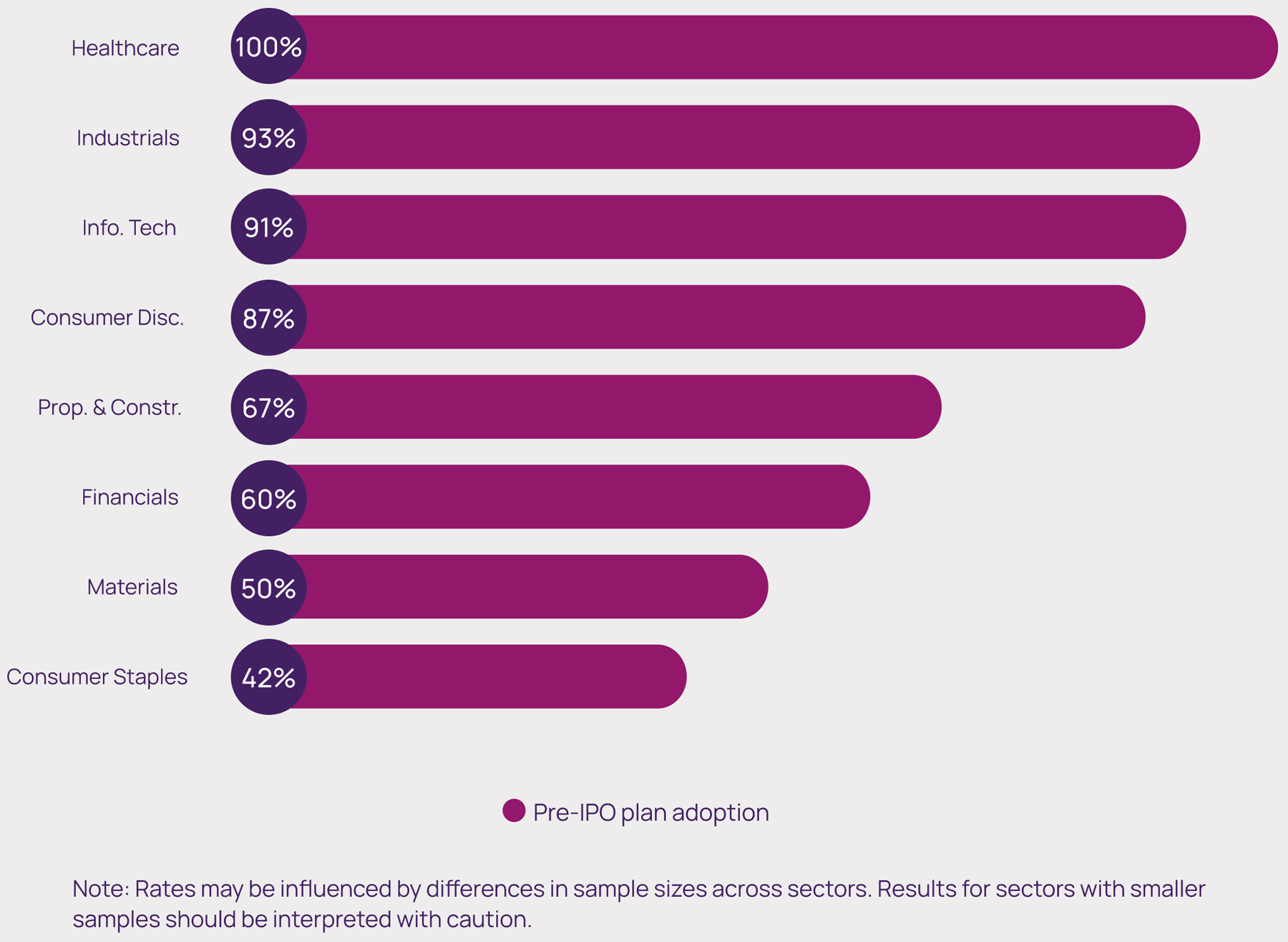
The pattern is particularly evident in Healthcare, Industrials, Information Technology, and Consumer Discretionary companies. Healthcare achieved 100% pre-IPO adoption in 2025, while Industrials recorded 93% and Information Technology at 91% demonstrated particularly strong adoption rates. Consumer Discretionary followed closely with 87%.
These sectors rely on specialised expertise, research and development capabilities, and long-term growth strategies, making equity an important tool for attracting and retaining talent.
Pre-IPO adoption rate by industry
Strong pre-IPO adoption among larger IPOs
 |
90%of largest Hong Kong IPOs |
For larger issuers, this points to a practical need to have plan rules, eligibility, grant processes and administration ready before public company obligations begin.
Making pre-IPO plans ready to use
Companies are not only establishing plans earlier, but they are also becoming more deliberate about plan how these plans are used. Among companies with pre-IPO plans, 93% had already made equity grants, demonstrating that these plans are being actively used rather than simply established solely for future use.
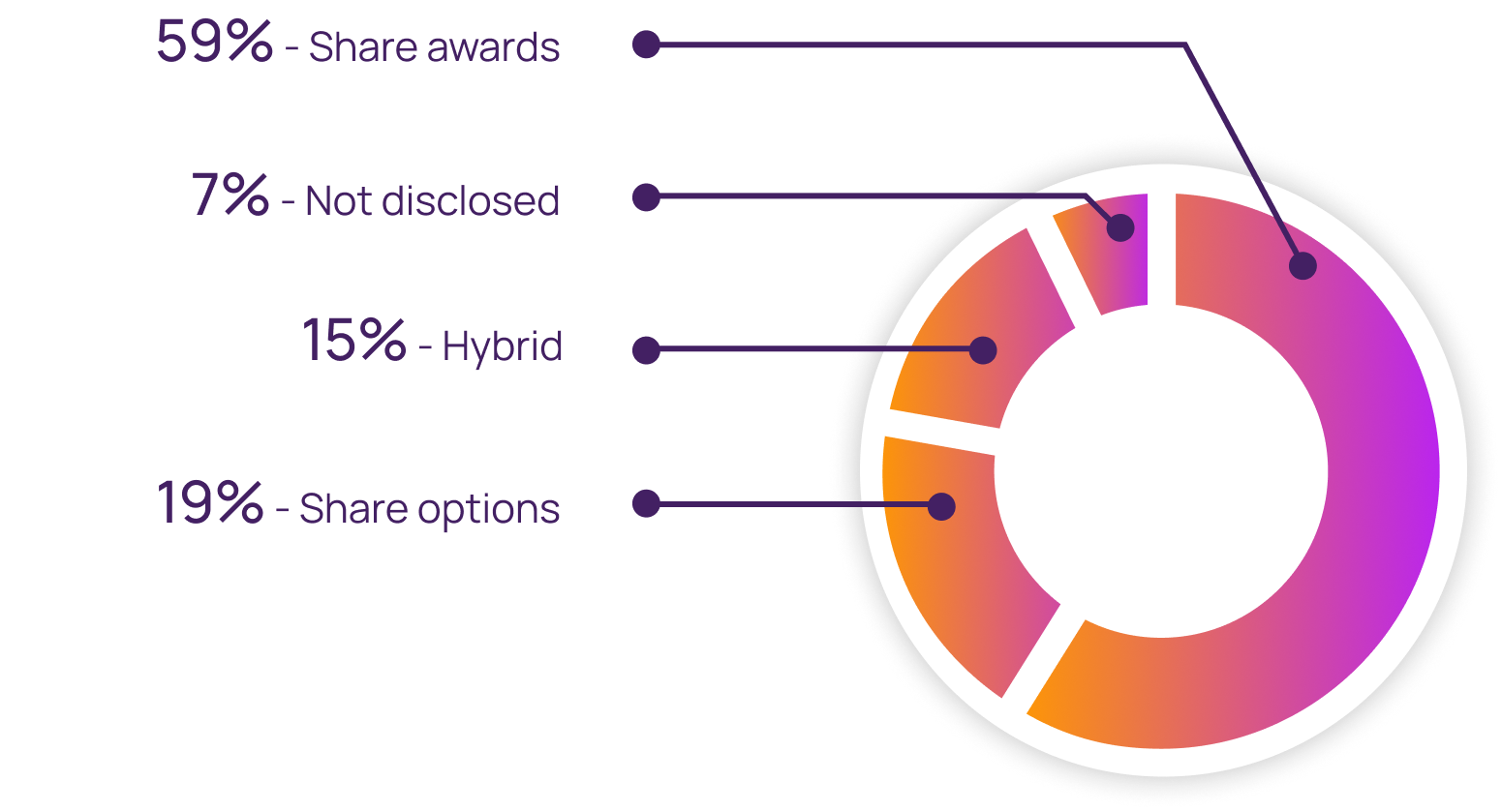
Share awards were the most common grant vehicle, used by 59% of companies with pre-IPO share plans. This may reflect their growing popularity as a retention and long-term ownership tool. Options and hybrid structures accounted for 34 %, providing flexibility to support different talent, retention, and performance objectives.
Prospective issuers need to decide early who the plan is for, how grants will be made and which structure best supports the people they need to retain through listing and beyond.
 |
93%of companies with pre-IPO plans made equity grants |
 |
59%of companies with pre-IPO plans use share awards |
Distribution of grant types
What prospective issuers should consider
Companies gain the greatest value when employee share plans are treated as part of IPO readiness. The research points to four practical steps:

Build equity into the IPO timetable
Start early enough to align plan design with ownership structure, growth plans, talent priorities and governance expectations.

Move from planning to execution
A share plan delivers value only when it is executed. Companies should ensure they are ready to make grants, communicate awards and administer the plan from day one.

Design for your business, not the market average
The most effective plans reflect a company's workforce profile, ownership structure, growth stage and talent priorities rather than adopting a one-size-fits-all approach.

Prepare for listed-company discipline
As organisations scale, governance requirements, participant numbers and administrative demands typically increase. Eligibility rules, vesting conditions, controls and reporting frameworks should be built with future needs in mind.
The companies best prepared for listing are those that treat equity as part of the transition to public-company discipline, with plan design, grant execution, governance and administration ready before day one.
Unlock Computershare's exclusive analysis
Explore exclusive research on how companies are using employee share plans to support IPO readiness, attract key talent and establish governance from day one.





Disclaimer: The services mentioned in this analysis are provided by Computershare's licensed corporation in Hong Kong. This analysis is provided for general information only.